



Why Are There More Men Than Women Among Retired CWU Members?
September 24 2026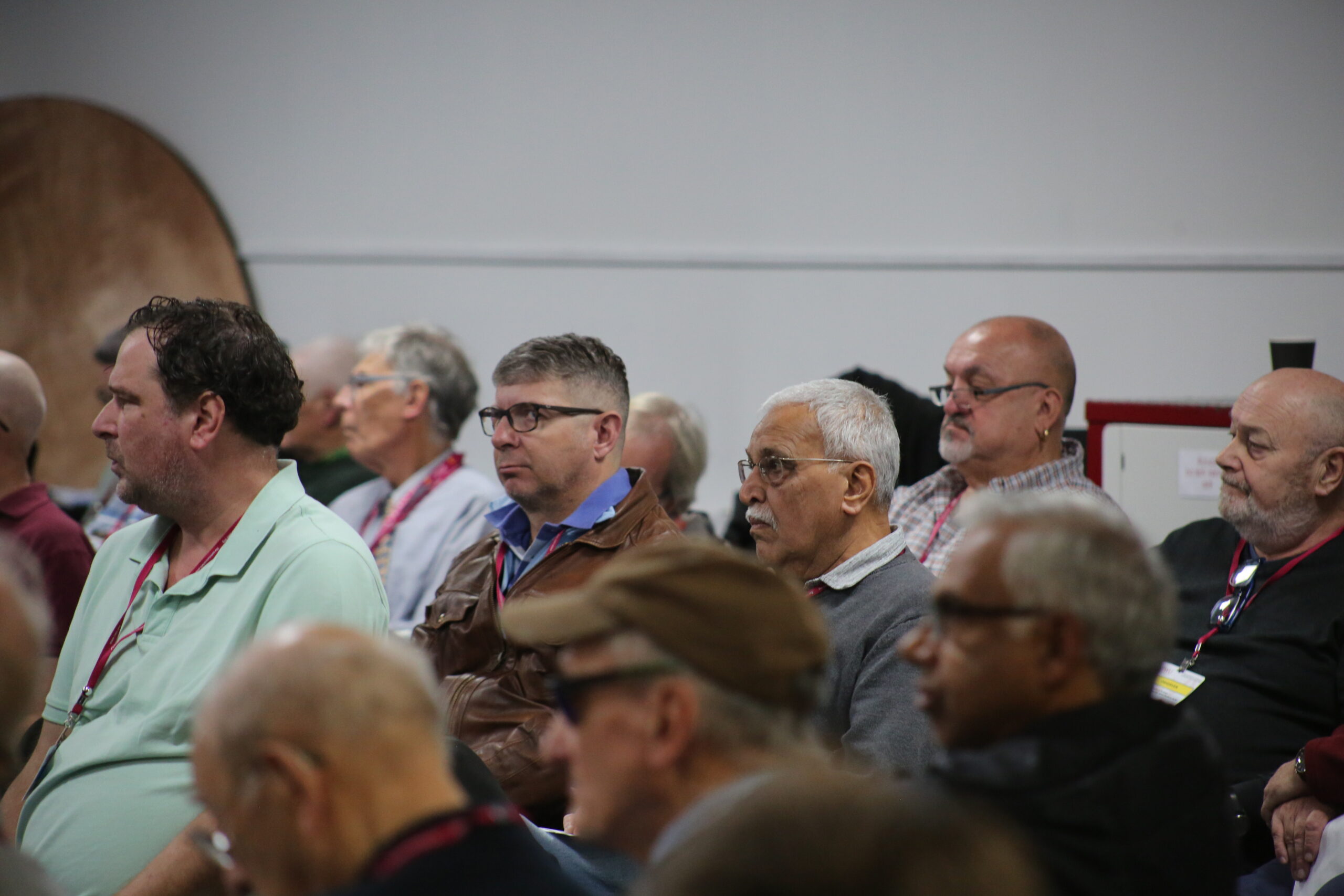
The reason there are still considerably more men than women among retired members of the Communication Workers Union (CWU) is largely rooted in the history of the industries we organise. It reflects the way work was structured in Royal Mail, telecommunications, engineering and related sectors 40, 50 and 60 years ago, rather than the reality of the modern union.
Importantly, the CWU today is a very different organisation from the one many retired members first joined. Our membership is far more diverse, women play a leading role across the union, and the workforce itself has changed significantly. The gender imbalance we see among retired members is therefore largely a reflection of the workforce of previous decades rather than the CWU of today.
- The industries the CWU traditionally organised were predominantly male
Many of today’s retired CWU members started their working lives in workplaces that were overwhelmingly male.
Whether in postal delivery, engineering, telecommunications, maintenance, transport or operational grades, the workforce of previous generations was heavily dominated by men. These sectors also had strong trade union traditions, resulting in high levels of union membership among male workers.
Women certainly played a vital role in the communications industry, particularly in clerical, administrative, customer service and telephone exchange roles, but historically these jobs were often underrepresented compared with the larger male-dominated operational grades.
As a result, today’s retired membership naturally reflects the composition of the workforce that existed at that time.
- Women often faced interruptions in their working careers
For many women in previous generations, balancing work and family responsibilities presented challenges that male colleagues were less likely to experience.
Women were far more likely to leave employment temporarily to raise children, care for family members or undertake other caring responsibilities. These career breaks could affect pension accumulation, length of service and continuity of union membership.
Many of the women who worked throughout their careers made enormous contributions to both the workplace and their families, but the realities of the time often meant they had a different employment journey from their male counterparts.
- Women were more likely to work part-time or in less secure roles
Historically, women were disproportionately represented in part-time and flexible working arrangements.
While these roles were essential to the running of postal and telecommunications services, they often came with fewer opportunities for career progression and, in some cases, lower participation in workplace organising and union activity.
The CWU has spent decades campaigning for fair treatment, equal pay, improved maternity rights and greater workplace security, helping to ensure that today’s workforce has access to opportunities and protections that were often unavailable to earlier generations.
- Women’s participation and leadership within the CWU has grown significantly
One of the biggest success stories within the modern trade union movement is the growth in women’s representation and influence.
Across the CWU, women are now represented throughout the union’s structures, from workplace representatives and branch officers to national committees and senior leadership positions. The union has worked hard to create pathways for women to become activists, negotiators and decision-makers.
The CWU Women’s Department, equality structures and dedicated campaigns have helped ensure that women’s voices are central to shaping the future of our union.
The CWU of today is a stronger union because of that progress.
- Retired membership reflects the past, not necessarily the present
Retired membership inevitably reflects the workforce of several decades ago.
The people who are retiring today largely entered the industry during the 1970s, 1980s and early 1990s, when workforce demographics were very different from those we see today.
Many of the women who joined the industry and the union in larger numbers over more recent decades have not yet reached retirement. There is therefore a natural time lag between the composition of the active workforce and that of the retired membership.
As today’s more diverse workforce moves through its career journey, the profile of retired membership will continue to evolve.
- Different experiences after retirement can affect levels of involvement
Retirement is not simply the end of working life; it marks the beginning of a new chapter.
For many retired members, CWU branches and retired members’ groups remain an important source of friendship, support and continued activism. Members remain involved in campaigning, protecting pensions, supporting industrial issues and helping maintain connections built over decades in the workplace.
Historically, many retired women have continued to carry significant caring responsibilities for partners, grandchildren and other family members. This can affect the amount of time available to participate in formal retired members’ activities, even where there remains a strong commitment to trade union values.
How Far the CWU Has Come
It is important that retired membership figures are viewed in their proper context.
The CWU has made substantial progress in promoting equality, improving representation and ensuring that women are fully involved at every level of the union. The workforce itself has changed dramatically, and so too has the face of trade unionism.
The traditional image of a union member as a male postal worker, engineer or technician no longer reflects the full reality of our membership. Today’s CWU includes women working across every part of the communications industry, from delivery and processing to customer services, administration, technology and management grades.
Women are not simply part of the CWU; they are central to its future.
Conclusion
The higher proportion of men among retired CWU members is best understood as a reflection of the workforce and society that existed several decades ago. It is a historical legacy rather than an accurate picture of today’s union.
The CWU’s active membership tells a different story: one of increasing diversity, stronger equality and greater participation by women at every level of the organisation.
As newer generations of members move into retirement, the make-up of our retired membership will increasingly mirror the progress that has been made. While there is always more work to do, the CWU can be proud of the strides it has taken to build a more representative and inclusive union for all members.